
The BBQuill journal
Your First Smoked Thanksgiving Turkey: Build the Plan Before You Light the Smoker
Choose a turkey that fits your cooker, plan the finish, and check the right temperatures for a calmer first Thanksgiving smoke.
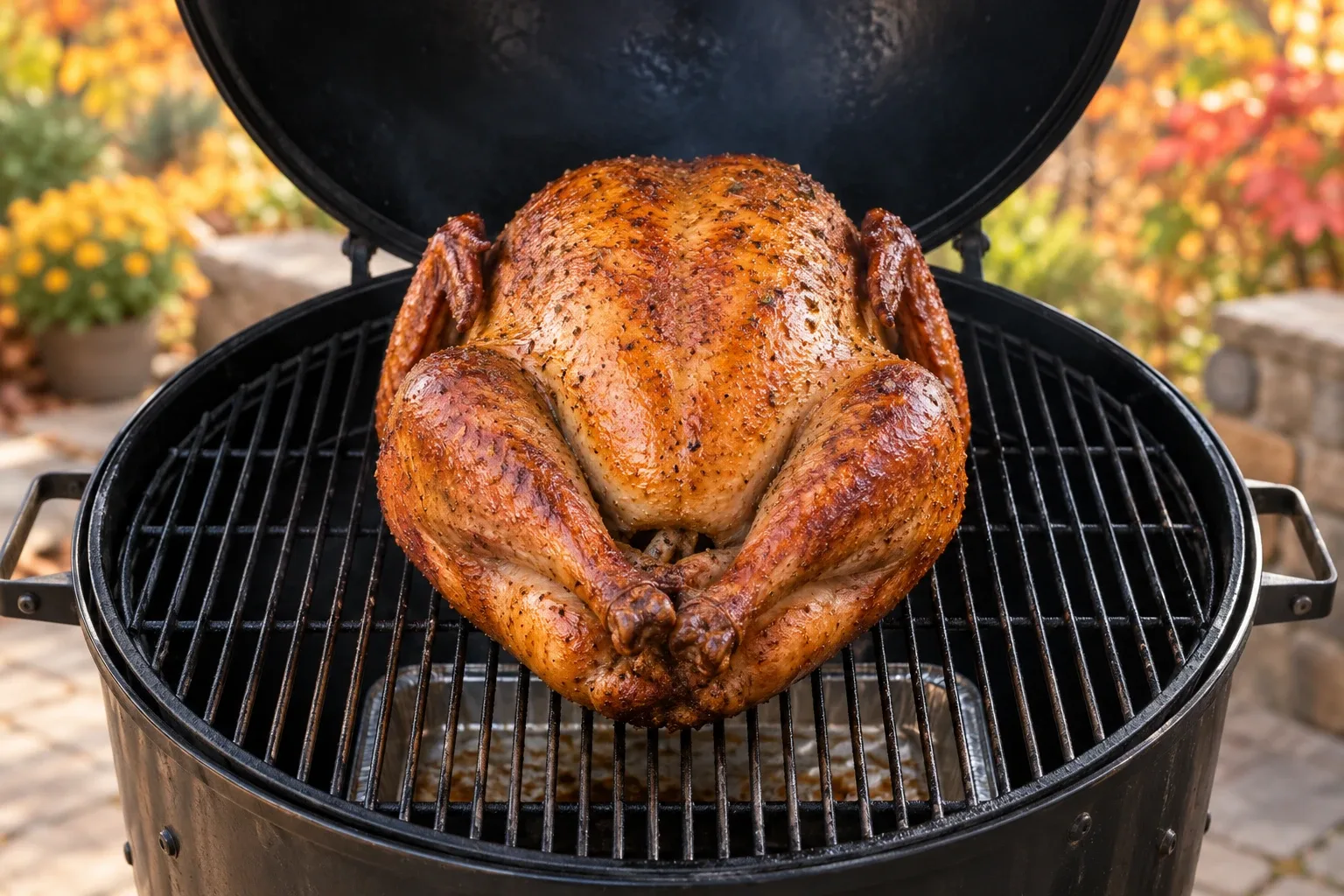
You have volunteered to smoke the Thanksgiving turkey. Now there are two jobs: cook the bird well, and have it ready when the rest of dinner is ready.
Start with the second job. A turkey that barely fits the cooker, needs a thaw you have not planned, or finishes while every side dish still needs the oven creates problems that no rub can fix. This is a planning guide for your first holiday smoke, with a straightforward temperature check at the center of it.
Choose the turkey around the cooker
For a first whole-bird smoke, a modest bird is a sensible place to start. USDA's smoking timetable covers 8- to 12-pound turkeys. That is a useful planning scope, not a promise that every bird in that range will cook the same way. USDA: alternate ways to cook turkey.
Before buying, check the grate dimensions, lid clearance, and the pan you plan to use. Leave room for air to move and for you to reach the food without balancing a hot pan on the edge. Follow your cooker's instructions for indirect cooking and drip-pan placement.
A turkey breast can suit a smaller table. A spatchcocked bird—one flattened after removing the backbone—needs a different footprint and its own recipe. Neither should inherit the cook-time estimate for a whole upright turkey. Choose one format now, then keep the recipe, shopping list, and schedule matched to it.
If your guest list calls for more turkey than your cooker comfortably holds, consider a second breast in the oven. That creates a separate item to monitor, but it can be easier than crowding one large bird into the smoker.
Make three decisions before Thanksgiving morning
Thawing: the turkey must be completely thawed before smoking. Keep it refrigerated during preparation; do not use the smoker to finish thawing it.
Seasoning: read the package before adding salt. A bird that already contains a salt solution needs a different seasoning approach from an unseasoned one.
Stuffing: cook it separately. USDA advises against stuffing a turkey destined for the smoker. USDA smoking guidance.
Put your thawing start, seasoning step, and planned cook start on the same calendar. “Prep the turkey” is too vague when it hides several days of thawing.
Build a finish window
Write down the serve time, then work backward through carving, a short rest, and the recipe's estimated cooking time. Add the cooker's preheat separately. Our guide to back-scheduling a BBQ meal explains that arithmetic.
USDA's whole-turkey smoking estimate is 20–30 minutes per pound. A 12-pound bird therefore has a rough four- to six-hour cooking window. That spread is exactly why “put it on at ten” is not a complete dinner plan. Weather, the bird's shape, and actual cooker temperature can move the finish. USDA turkey timetable.
Choose a recipe and cooker setup you can maintain. USDA describes smoking at 225–300°F, with a thermometer monitoring the cooker and another checking the food. For this beginner plan, stay within that range and your manufacturer's instructions. Keep a clear oven available as a backup if the smoker cannot maintain heat.
Check the bird in more than one place
A leave-in probe is useful for following progress. It does not certify the whole turkey from one reading.
Before taking a whole bird off, confirm at least 165°F in the thickest breast and the innermost thigh and wing, avoiding bone. Check both sides when they are heating unevenly. If a reading looks surprising, reposition the thermometer and check again. USDA thermometer placement.
This guide does not rely on pulling a turkey below that minimum and hoping carryover heat finishes the job. Dark meat may suit your taste at a higher temperature; that preference is separate from the safety check. A safe bird does not have to be cooked to brisket tenderness.
Give the skin a fair chance
Pat the surface dry with disposable paper towels before seasoning, and avoid repeatedly wetting it during the cook. Do not rinse raw turkey; splashes can spread contamination. USDA guidance on washing poultry.
Treat crisp skin as a texture goal, not the sign that dinner is safe. Plan any hotter finishing step from a recipe suited to your equipment rather than improvising over a flare-up. Keep checking the breast so a quest for darker skin does not become a much longer cook.
Leave yourself a useful cook log
Record the turkey's weight and format, cooker temperature, start time, final checks, and what you would change. Note whether the oven backup or a holding step was needed. Those details make next year's estimate more useful than a photo of the finished platter alone.
The goal for this first cook is manageable: a bird that fits, a plan that has room to move, and temperature checks you trust.